
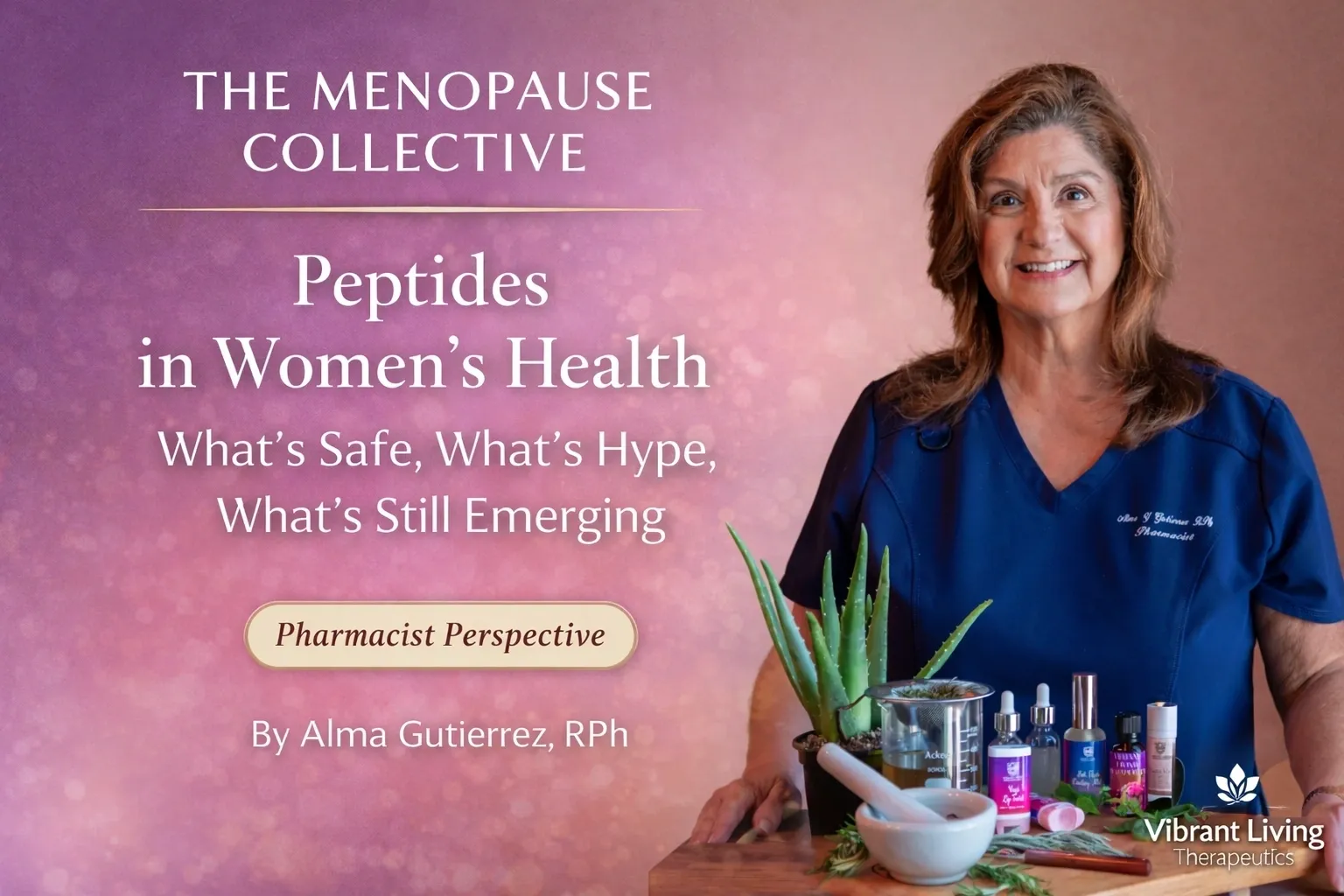
Peptides and Women’s Health: What’s Safe, What’s Hype, and What’s Still Unknown
Lately, it feels like the word peptides is everywhere.
Patients ask about them at the pharmacy. Aesthetic clinics are advertising peptide injections for weight loss, anti-aging, libido, muscle tone, and energy. Social media influencers are talking about peptide “stacks” that promise everything from faster metabolism to improved sleep and skin repair.
As a pharmacist and a woman in midlife, I understand why this topic is getting so much attention. Many women are looking for solutions for changes in skin, metabolism, muscle tone, intimacy, and overall vitality that often accompany menopause.
But when something new gains popularity quickly, it is important to pause and ask:
What exactly are peptides?
Are they safe?
And are the claims supported by science?
Let’s take a clear, balanced look.
What Are Peptides?
Peptides are short chains of amino acids — essentially small fragments of proteins. These small protein pieces act as messengers in the body, helping regulate many biological functions.
Your body naturally produces peptides every day.
Some peptides help:
- regulate blood sugar
- control appetite
- stimulate collagen production
- signal healing and tissue repair
- influence hormone activity
- support immune function
One well-known peptide is insulin, which helps control blood sugar levels. Another group of peptides, called GLP-1 medications, are now widely used for diabetes and weight management.
Peptides themselves are not new. What is new is the rapid increase in peptides being marketed directly to consumers for anti-aging, weight loss, and performance enhancement.
Understanding the differences between peptide types is key.
The 3 Main Categories of Peptides
Not all peptides carry the same level of scientific evidence or safety oversight.
1. FDA-Approved Peptide Medications
Several peptide medications have been thoroughly studied and approved by the FDA for specific medical conditions. These therapies have undergone clinical trials in humans, have established dosing guidelines, and are prescribed under medical supervision.
Examples include:
- insulin – a peptide hormone essential for blood sugar regulation
- GLP-1 receptor agonists such as semaglutide and tirzepatide used for diabetes and weight management
- fertility-related peptides such as gonadorelin and leuprolide which influence ovulation and hormone signaling
- libido treatment bremelanotide approved for hypoactive sexual desire disorder
- skin-related peptide therapy afamelanotide used for certain light-sensitivity skin disorders
These medications have:
- undergone controlled human clinical trials
- defined dosing standards
- Known side effects
- physician oversight
Even when used off-label, these therapies still rely on scientific evidence that helps healthcare providers evaluate risks and benefits more carefully.
As pharmacists, we are comfortable discussing these therapies because we understand how they work and how to monitor their use appropriately.
2. Cosmetic Peptides in Skincare
Peptides are also commonly used in topical skincare products.
Examples include:
- copper peptides
- signal peptides
- collagen-support peptides
These peptides are designed to support skin appearance by encouraging hydration, elasticity, and smoother texture.
Because these peptides are applied to the skin rather than injected into the body, they are generally considered low risk when used as directed.
Many well-formulated skincare products combine peptides with:
- botanical oils
- antioxidants
- barrier-support ingredients
- hydrating compounds
Topical peptides work at the surface level of the skin and do not affect the body systemically the way injectable therapies do.
3. Non-FDA-Approved Injectable Peptides
This is the category generating the most attention — and the most questions.
A growing number of injectable peptides are being marketed online and through wellness clinics for benefits such as:
- fat loss
- increased muscle mass
- improved sleep
- enhanced libido
- faster injury recovery
- anti-aging effects
- increased energy
Examples often promoted include:
- BPC-157
- TB-500
- CJC-1295
- Ipamorelin
- Melanotan
Many of these peptides are sold as “research use only” products.
The challenge is that most have:
- limited human clinical trial data
- unknown long-term safety profiles
- unclear dosing standards
- variability in purity depending on manufacturer
- limited understanding of interactions with medications or medical conditions
Some peptides may eventually become FDA-approved therapies as research evolves. However, many currently being marketed remain investigational.
Another concern is that peptides purchased online may not always contain what the label states. Independent testing has found inconsistencies in purity and dosing in some online products.
For women navigating menopause symptoms, it can be tempting to explore emerging therapies — especially when symptoms affect daily comfort, confidence, sleep, relationships, and quality of life.
But thoughtful decision-making is important.
Comparing the 3 Types of Peptides
Why Peptides Are Getting Attention in Midlife Women
Menopause often brings noticeable changes that can affect how we feel in our bodies.
Common concerns include:
- thinning skin
- dryness
- decreased collagen
- changes in muscle tone
- fatigue
- changes in libido
- weight gain
- sleep disruption
Women are increasingly seeking solutions that help them feel vibrant, confident, and comfortable.
Unfortunately, this also makes midlife women a frequent target for marketing that promises quick or dramatic results.
Innovation in medicine is important — but so is transparency.
Questions to Ask Before Considering Peptide Therapy
If you are considering peptide therapy, these questions can help guide a thoughtful conversation with your healthcare provider:
- Is this peptide FDA approved?
- What human clinical trials support its use?
- What are the known side effects?
- How is dosing determined?
- Who manufactures the product?
- Is the provider medically licensed?
- What monitoring is recommended?
- How does this compare with established therapies?
It is also important to consider whether lifestyle approaches, topical therapies, or established treatments may provide benefit with more known safety profiles.
A Balanced Approach to Women’s Wellness
As both a pharmacist and founder of Vibrant Living Therapeutics, my philosophy has always been to support women with solutions that are:
- gentle
- evidence-informed
- realistic in their claims
- supportive of the body’s natural physiology
New therapies will continue to emerge, and some peptide treatments may eventually prove beneficial as research evolves.
But women deserve clear information so they can make decisions confidently — not based on marketing pressure, but on understanding.
Menopause is not a problem to be “fixed,” but a transition that may require new forms of support.
Whether that support comes from lifestyle changes, skincare, non-hormonal options, medical therapies, or emerging science, the goal is always the same:
Helping women feel comfortable, confident, and well-informed in their bodies.